
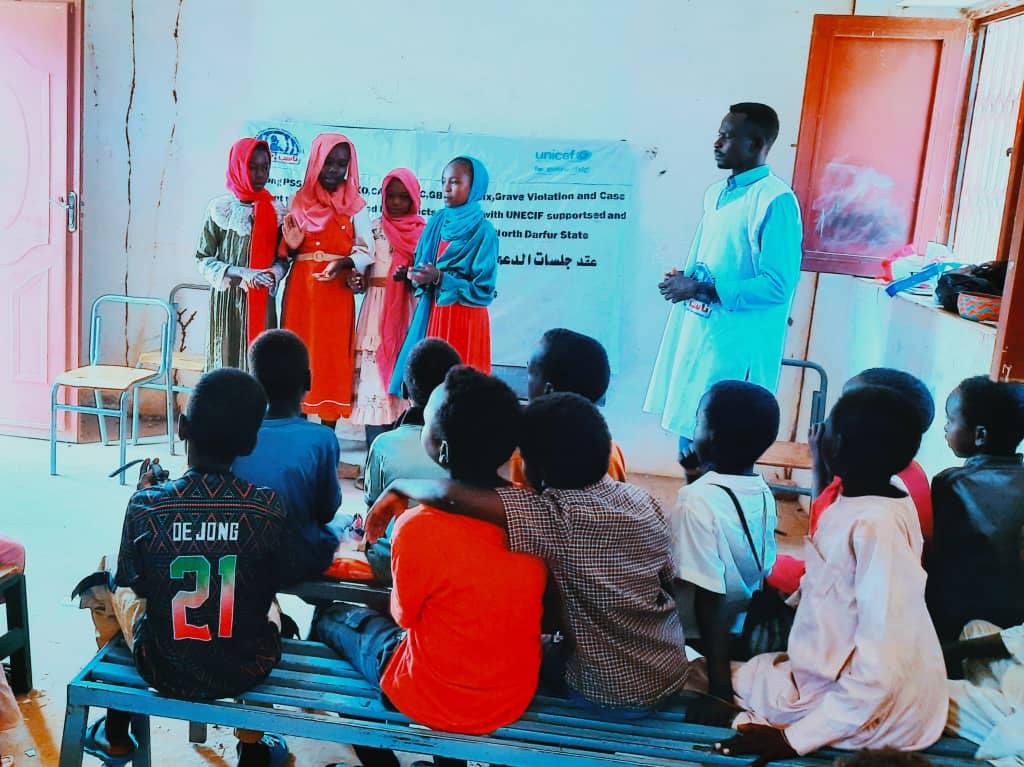
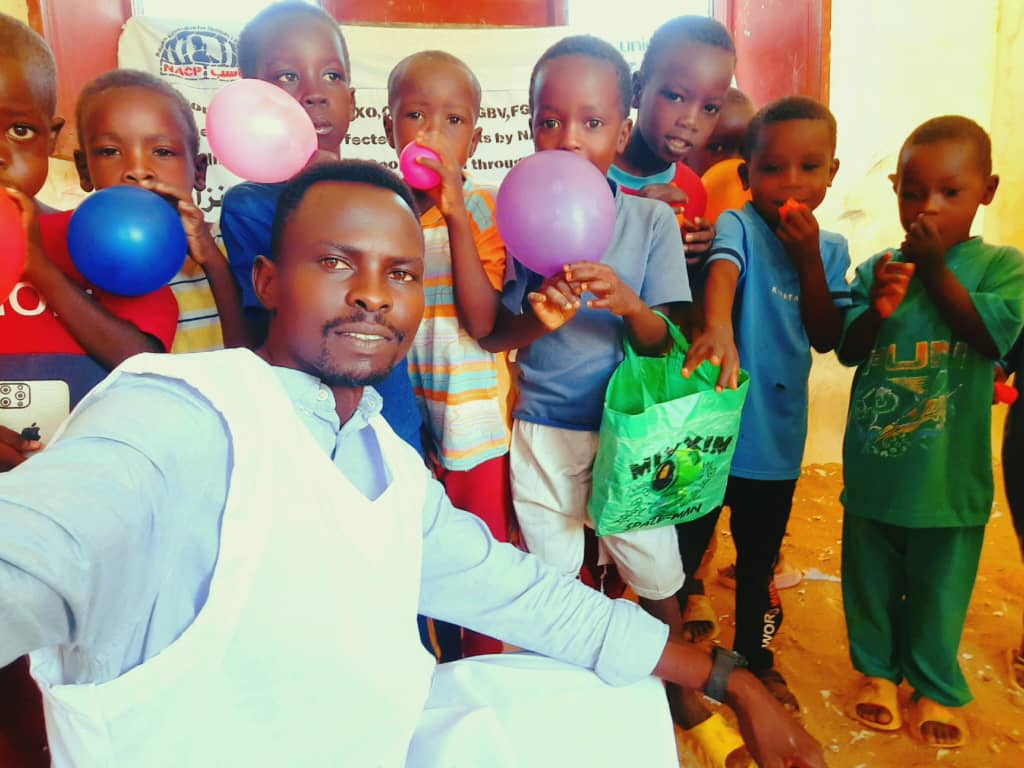
In the dusty outskirts of Kutum, at Fata Bornu camp, children’s laughter has begun to return after years of silence. For too long, the echoes of conflict drowned out play, learning, and hope. Families lived under the shadow of war remnants, unexploded ordnance scattered across fields where children once chased footballs.
But in 2024, a new initiative arrived — psychosocial support for children affected by conflict. It was not just a project; it was a lifeline.
A Child’s Journey
Amina, 11 years old, had stopped speaking after witnessing clashes near her village. Her mother worried she would never smile again. When the project began, Amina joined group drawing sessions. At first, her sketches were dark and heavy, but slowly, colors returned. She drew houses, trees, and children playing. By mid‑2025, Amina was leading her peers in rope games, her laughter carrying across the camp.
Youth and Sports
For boys like Musa, 16, football became more than a game. It was a safe space to release fear, to rebuild trust with friends, and to dream beyond the camp’s boundaries. Volleyball nets and rope games stitched together bonds between youth who once saw only division.
Women as Anchors
Fifty women participated in awareness sessions, learning how to guide children through fear and displacement. They became anchors of resilience, teaching families how to stay safe during evacuations, how to navigate checkpoints, and how to protect children from the dangers of war remnants.
Impact on the Community
By the end of the first year, 450 individuals — women, children, and youth — had been touched by the program. The camp saw:
- Reduced displacement as families felt safer and more cohesive.
- New talents discovered among children through art and play.
- Gender equality strengthened, with girls and boys participating side by side.
- Tolerance and solidarity replacing tribal divisions, weaving back the torn social fabric.
The Bigger Picture
This project was more than sessions and activities. It was about restoring dignity, repairing the social fabric, and giving children the tools to face tomorrow with courage. In a place scarred by war, resilience became the new language — spoken through games, drawings, and shared laughter.